
Who Is Qullamaggie?
Kristjan Kullamägi, known online as Qullamaggie, is a Swedish swing trader who turned a $5,000 account into over $100 million in under ten years. His Qullamaggie setup library, built around the Breakout, the Episodic Pivot, and the Parabolic Short, became some of the most studied setups in the retail trading community. Understanding why Qullamaggie’s setups work just not in every market is exactly what separates traders who last from those who give everything back. He stood out from most trading personalities online because he shared everything for free, no courses, no subscriptions, just raw transparency about how he traded.
He started in 2011, blew up his early accounts, and had his first profitable year in 2013. By 2020 he had crossed nine figures in total gains, making him one of the most impressive self-made traders in modern history.
What the Qullamaggie Setup System Actually Looks Like
Qullamaggie built his entire career around three core setups. The Breakout looks for stocks that made a big move, pulled back into a tight consolidation, and then push to new highs on strong volume. The Episodic Pivot targets a gap up of 10% or more driven by a major catalyst like an earnings surprise, where he buys the opening range high on massive volume. The Parabolic Short comes in when a stock has gone up too far too fast and starts showing exhaustion, and he either shorts the breakdown or buys the bounce after the collapse.
All three share the same logic. They look for explosive price action, define a clear risk point, and aim for an asymmetric reward. When the market is cooperating, these setups can produce massive returns in a very short time.
The Drawdown That Shook Everything
Most strategies have completely different win rates and profit rates depending on what the market is doing at that moment. This is one of the biggest reasons why young traders struggle to make real money in their first four or five years. They simply have not lived through a full market cycle yet, so they have no reference point for how different one environment can feel from another.
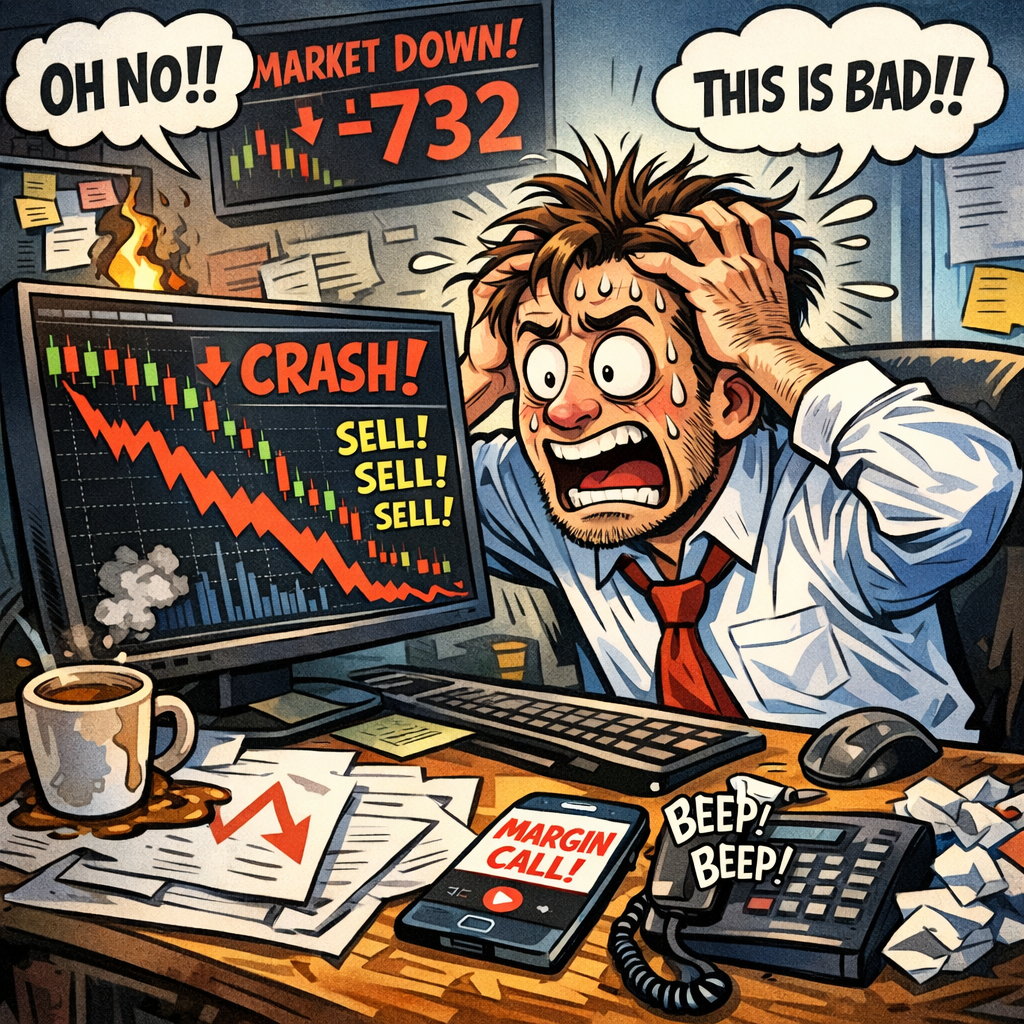
Like Qullamaggie, many traders are not fully aware of how a hostile market quietly corrupts everything underneath them. The stock filter that used to surface great candidates starts returning garbage. The win rate drops. The average profit per trade shrinks. And the beliefs that felt like wisdom in a bull market, things like the harder I work the more I earn, become a death sentence in a bear market. In a bad regime, the harder you push, the more damage you take. And the cruelest part is that the occasional winner that slips through keeps you glued to your desk, convinced your luck is about to turn, while the losses quietly pile up around it.
Weird Thing Is: He Knew That Was A Bear Market
Qullamaggie himself has talked openly about how to read the market environment. Keep it simple, he said. Look at whether the EMAs are trending up and whether the short term EMA is sitting above the longer term one. Clear, logical, easy to follow. But somewhere along the way, it seems even he could not follow his own rule. The most likely explanation is not that he forgot his framework. It is that a handful of rare winners in a deteriorating market kept alive the belief that he was just running through a bad luck streak. But it was never bad luck. It was the wrong market, and no amount of effort or screen time was going to change that.
He Was Trading the Setup, Not the Environment
This is the core mistake most traders make, and Qullamaggie was not immune to it. From 2016 to 2021, the market spent most of its time in a strong momentum driven bull regime where buying breakouts was one of the easiest ways to make money. That environment conditioned him and thousands of his followers to trust those setups unconditionally.
When the market shifted into a distribution and then a bear regime in 2022, those same breakouts started failing repeatedly. Stocks would pop on earnings and then reverse. Breakouts would trigger and immediately get sold back down. The setups looked right but the environment had turned hostile, and without a way to measure that shift, there was no signal to stop.
Why Qullamaggie Kept Trading a Broken Market
Qullamaggie clearly understood that breakouts work best in a trending bull market. He has said it himself many times. But understanding something intellectually and feeling it in real time are two completely different things. A big part of the problem traces back to when he built his intuition for the market. He started developing his edge in an era where regime changes were far less frequent. The market spent long, extended stretches in clean uptrends, which meant his internal clock for spotting environmental shifts never got properly stress tested. He simply did not accumulate enough reps in hostile conditions to develop a sharp sensitivity to the early signs of a regime turning against him.
No System to Catch the Rot Early
On top of that, there is no evidence he was running any kind of rolling win rate tracking system. Without one, you have no objective, real time feedback on whether your strategy is degrading. By the time the losses feel undeniable, the strategy has likely been underperforming for months already, and you have been trading through all of it. The low win rate nature of breakout trading makes this even worse. Because you expect most trades to fail even in good conditions, a stretch of losses does not immediately feel like a red flag. It just feels like a normal rough patch, which buys the bad market even more time to drain your account before you react.
By the Time the Chart Looks Bearish, It Is Already Too Late
What many people also overlook is that breakout strategies do not just struggle in bear markets. They fall apart in ranging, sideways markets too. Chop is arguably just as lethal as a downtrend for this kind of setup. So if you are waiting for the moving averages to roll over and give you a clean bearish signal before you pump the brakes, you are already way too late. The damage has been done. The moving average confirmation is not a warning, it is a eulogy. By the time the chart looks definitively bearish, the strategy stopped working three months ago.
What Is the SPY Regime Change Method?
The SPY Regime Change method is a framework that reads the condition of the overall market before any trade is placed. Rather than just focusing on individual stock charts, it tracks the SPY on a higher timeframe to determine what kind of environment is active right now. Is the market trending cleanly above rising moving averages with broad participation, or is it choppy, breaking down, and showing distribution?
The method defines clear regimes such as a bull trend regime, a choppy transitional regime, and a bear regime, and it tells you which playbook is appropriate for each one. The key idea is that your strategy should match the current market condition, not just the setup on the chart.
How It Would Have Caught the Warning Signs
If this regime filter had been applied going into late 2021, the signals were already flashing. The SPY started breaking below key moving averages, market breadth was deteriorating, and the leading growth stocks that Qullamaggie loved to trade were already topping out months before the index itself rolled over. A regime change reading would have flagged the shift from a bull trend to a distribution regime early enough to act.
That single filter would have said to stop taking new long setups or at the very least shrink position sizes to almost nothing. The bulk of his drawdown came from repeatedly pressing long setups in a market that had already turned against them, which is exactly what the regime method is designed to prevent.
The Qullamaggie Setup Still Works — Here Is When to Use It
The fix is not to abandon any of the three setups. The Breakout, the Episodic Pivot, and the Parabolic Short all have real edges when used in the right conditions. The fix is to only deploy each one when the SPY regime confirms the environment supports it, long setups at full size in a confirmed bull regime, sized down in a transitional regime, and avoided completely in a bear regime.
Watch How Many Stocks Pass Your Filter
The first tool is tracking the amount of stocks passing your filter on any given day. In a healthy bull regime, your scan lights up with quality candidates that meet your criteria. As the market deteriorates, that number shrinks, and when your filter starts returning almost nothing worth looking at, the market is already telling you to step back.
You do not need a moving average crossover to confirm what an empty watchlist is already saying. The filter count is a live, unfiltered read on market health, and it reacts faster than any indicator on your chart.
Track Your Rolling Win Rate, Not Your All Time Numbers
The second tool is a rolling win rate tracker on your recent trades. Rather than looking at your all time performance, you track a moving window of your last 20 or 30 trades and watch how that number trends over time. When your win rate starts quietly sliding from 40 percent down to 25 percent over a few weeks, that is the market sending you an early warning signal.
This is the system Qullamaggie did not have, and it is exactly what would have caught the regime shift months before the losses became impossible to ignore. Your all time stats will always look fine right up until they do not. Your rolling stats will tell you the truth in real time.
Let Your Position Size Reflect the Reality of the Market
The third tool is dynamic position sizing adjustment tied directly to those two signals. When the filter is full and the rolling win rate is healthy, you size up and press your edge hard. When the filter thins out and the win rate starts dipping, you automatically scale down your size, not because you feel nervous, but because the rules say so.
This removes emotion from the equation entirely. You are not guessing whether the market is good or bad. The numbers are making that decision for you, and your position size reflects it before the damage gets out of hand.
A Note Before You Go
I will be straightforward here. Roughly 80 percent of what I know about trading came directly from Qullamaggie. Not from a paid subscription, not from a YouTube guru showing off a rented Lamborghini, but from a guy who simply sat down and shared everything he knew for free. The week I finished watching his videos, I made over 200 percent in two weeks. That single experience completely changed how I thought about trading and what I believed was actually possible.
If he ever comes across this, I want him to know that what he did for the trading community is genuinely rare and I am deeply grateful for it.
But markets change, and eventually the same breakout strategy that felt like a cheat code started producing choppy month after choppy month. That frustration pushed me into a whole new learning phase, and the question I kept coming back to was simple. How do you spot the early signs that your strategy has stopped working before it does serious damage to your account? That search led me to the three tools covered in this article, the filter count, the rolling win rate, and dynamic position sizing. None of them replace what Qullamaggie built. They just make sure you are still around to use it when the market deserves it.
Leave a Reply